
Picture this: a team of software developers sitting in a sterile conference room in Santa Monica, CA, staring at a whiteboard covered in sticky notes, trying to crack a particularly stubborn UX design problem. The fluorescent lights hum overhead. Someone pours their third cup of mediocre coffee. Ideas trickle in slowly, and the energy in the room feels about as inspiring as a loading screen that never resolves.
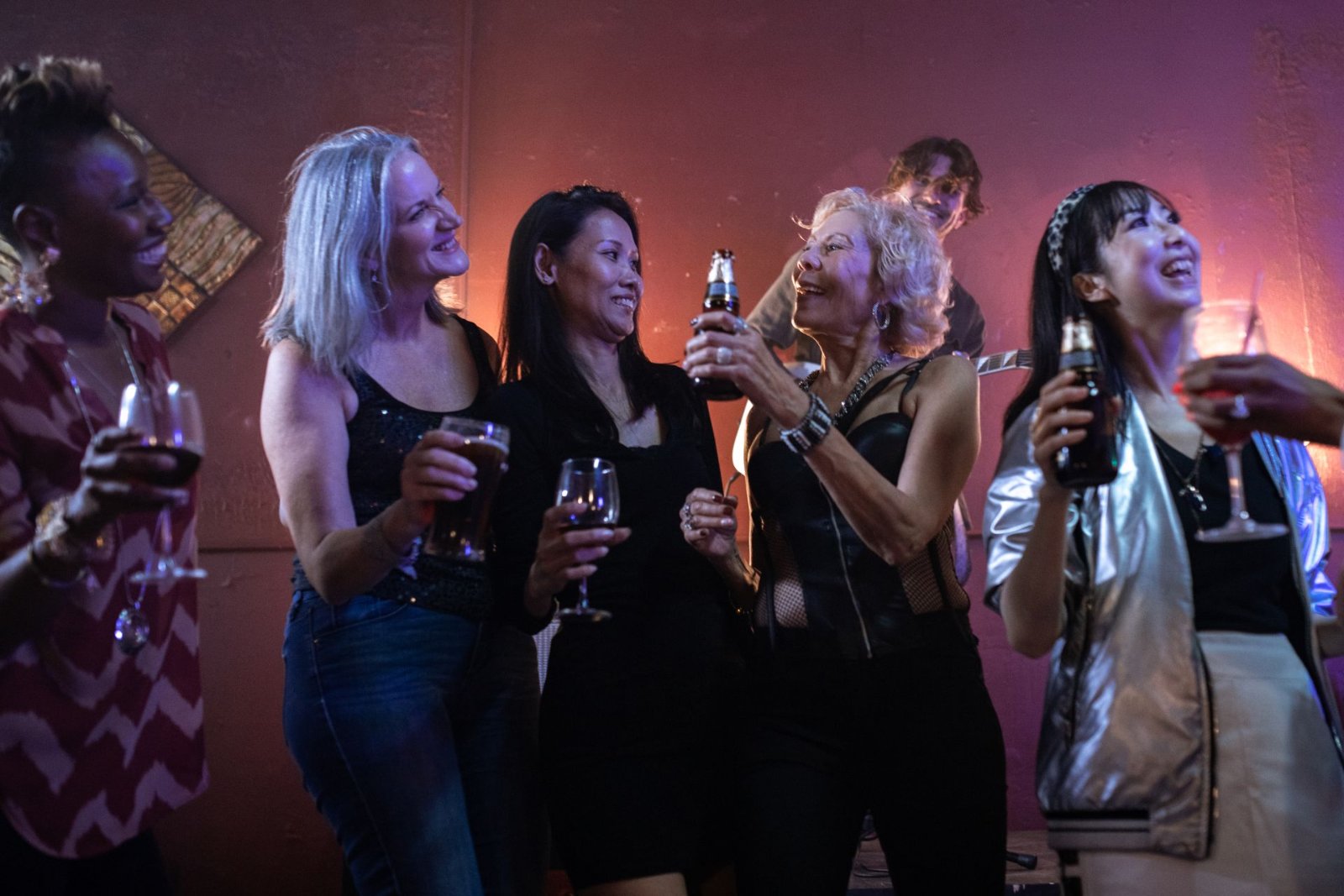
Now picture the same team, three weeks later, laughing around a high-top table at a lively bar on the Third Street Promenade. Someone sketches a wireframe on a cocktail napkin. Another developer riffs on the idea, adding a feature that nobody had considered before. By the time the group moves to their second stop of the evening, they’ve cracked the problem that had stumped them for two weeks in that conference room.
This isn’t a hypothetical. This is exactly what happened to a development team based in Santa Monica — and their experience has sparked a fascinating conversation about creativity, environment, and the unexpected power of social settings in professional problem-solving.
The Santa Monica Dev Team That Changed How They Think About Innovation
The team in question works for a mid-sized tech startup headquartered just a few blocks from the Santa Monica Pier. Like many software development teams, they had a structured weekly brainstorming session built into their calendar. Every Thursday at 2 PM, the whole squad gathered in the conference room to tackle architectural decisions, debug complex problems, and ideate on new product features.
The sessions weren’t bad, exactly. They were functional. But the team’s lead developer, Marcus, noticed something troubling: the best ideas never seemed to come from those meetings. They came from hallway conversations, from lunch breaks, from the occasional happy hour at one of Santa Monica’s many excellent bars.
“I started keeping a mental log,” Marcus explained. “Every time we had a genuine breakthrough — a real ‘aha’ moment — I’d try to trace back where it actually happened. And almost none of them happened in the Thursday session. They happened when we were relaxed, when we were talking about something else entirely, or when we were out having a drink together.”
That observation led Marcus and his team to try something unconventional: replacing one of their monthly brainstorming sessions with a structured bar crawl through Santa Monica’s vibrant nightlife scene, facilitated through Barcrawlerz, a popular bar crawl organization service that operates throughout the Los Angeles area.
The Science Behind Social Settings and Creative Thinking
Before dismissing this as an excuse to drink on the company dime, it’s worth understanding the legitimate neuroscience and psychology at play here. Researchers have been studying the relationship between relaxed social environments and cognitive creativity for decades, and the findings are genuinely compelling.
How Mild Relaxation Expands Cognitive Flexibility
A landmark study published in the journal Consciousness and Cognition found that a mild state of intoxication — equivalent to a blood alcohol content of about 0.07 — actually improved performance on creative problem-solving tasks. Participants were better at finding the common link between seemingly unrelated words, a classic measure of divergent thinking.
The reason, researchers believe, is that alcohol reduces what’s known as “executive control” — the brain’s tendency to filter out seemingly irrelevant associations. In other words, the mental gatekeeping that helps you stay focused also prevents you from making the unexpected leaps that lead to creative breakthroughs.
But here’s what’s equally important: you don’t need to be intoxicated for this effect to occur. Simply being in a relaxed, social environment — away from the pressure of a formal meeting — can produce similar cognitive benefits. The bar setting acts as a psychological cue that signals to your brain: “This is not a high-stakes situation. You can play.”
The Role of Environmental Change in Stimulating New Thinking
Neuroscientists have long understood that novelty is a powerful driver of creative cognition. When you encounter a new environment, your brain is forced to process unfamiliar stimuli, which activates neural pathways that might otherwise remain dormant during routine activities.
A bar crawl, by its very nature, delivers constant environmental novelty. Each new venue brings different lighting, different music, different ambient conversations, different visual textures. For a team of developers accustomed to staring at the same four walls every Thursday afternoon, this kind of sensory variety can be genuinely transformative.
“Creativity isn’t just about thinking harder. It’s about thinking differently. And you can’t think differently if everything around you is exactly the same as it always is.” — Dr. Sandi Mann, University of Central Lancashire, on the relationship between environment and creative cognition
Social Dynamics and Psychological Safety
Google’s famous Project Aristotle — a multi-year study into what makes teams effective — identified psychological safety as the single most important factor in high-performing teams. Psychological safety means team members feel comfortable taking risks, sharing half-formed ideas, and being vulnerable without fear of judgment.
Formal brainstorming sessions, despite their best intentions, often undermine psychological safety. The conference room setting signals hierarchy and evaluation. People perform for the boss. They self-censor ideas that seem too wild or insufficiently developed. The social contract of a professional meeting is fundamentally different from the social contract of a night out with colleagues.
Bar crawls, particularly well-organized ones like those facilitated by Barcrawlerz, create the kind of informal bonding experiences that build genuine psychological safety within teams. When you’ve laughed together, navigated a new neighborhood together, and shared a round of drinks, the professional armor comes off — and the real ideas start flowing.
What the Santa Monica Bar Crawl Actually Looked Like
The team’s first experiment with Barcrawlerz took them through some of Santa Monica’s most distinctive neighborhoods and watering holes. The route wound from the energy of the Promenade area through the more laid-back vibes of Main Street, hitting a mix of craft cocktail bars, casual neighborhood spots, and lively rooftop venues.
Structure Within Freedom: The Key to a Productive Bar Crawl
What made the experience work, the team agreed, was that it wasn’t completely unstructured. Barcrawlerz provided a loose framework — a route, a timeline, suggested conversation starters at each venue — while leaving plenty of room for organic conversation to develop.
At the first stop, the team was encouraged to talk about anything except work. This might seem counterproductive, but it served a crucial purpose: it allowed everyone to decompress and shift out of “work mode” before the professional conversation began. By the second venue, the conversation naturally started drifting toward the problems they’d been wrestling with — but in a completely different register.
“It felt like we were just chatting,” said Priya, one of the team’s senior engineers. “But we were actually solving things. We were talking about the API architecture problem like it was a puzzle we were doing for fun, not a crisis we needed to resolve before the next sprint.”
The Cocktail Napkin Moment: Where the Real Work Happened
By the third stop — a dimly lit craft cocktail bar on Main Street with exposed brick walls and a jazz playlist that somehow perfectly soundtracked the mood — the team had their breakthrough. It came, as these things often do, from an unexpected angle.
One developer, Jordan, had been describing a completely unrelated experience: trying to navigate the Santa Monica bike-share system. He was talking about how the app’s interface made it hard to find available bikes in real time. Someone at the table said, “That’s exactly our problem with the dashboard — users can’t see what’s available at a glance.”
The connection was immediate and electric. Within minutes, the team was sketching out a new dashboard architecture on a cocktail napkin — one that borrowed principles from real-time availability interfaces and applied them to their product in a way none of them had considered before.
That napkin sketch became the foundation of a feature that shipped two sprints later and received overwhelmingly positive user feedback.
Why Traditional Brainstorming Sessions Often Fall Short
The Santa Monica team’s experience isn’t an anomaly. Research consistently shows that traditional brainstorming sessions — the kind that have been a corporate staple since advertising executive Alex Osborn popularized them in the 1940s — are far less effective than most organizations believe.
The Problem of Production Blocking
In a group brainstorming session, only one person can speak at a time. While one person is talking, everyone else is waiting — and while they’re waiting, they’re not generating new ideas. This phenomenon, known as “production blocking,” significantly reduces the total creative output of a group compared to what the same individuals could generate working independently.
A bar crawl sidesteps this problem naturally. Conversations happen in smaller clusters, multiple threads develop simultaneously, and people drift between discussions as the evening progresses. There’s no queue, no waiting for your turn to speak, no facilitator managing a whiteboard.
Evaluation Apprehension in Formal Settings
Even in brainstorming sessions where leaders explicitly say “there are no bad ideas,” participants know that’s not entirely true. Ideas are being evaluated in real time by colleagues and managers. The social cost of proposing something that gets shot down in a conference room is real and felt by everyone in the room.
This evaluation apprehension causes people to self-censor — to share only their most polished, defensible ideas rather than their most creative, half-formed ones. And it’s the half-formed ideas, the ones that seem almost too weird to say out loud, that often contain the seeds of genuine innovation.
Conformity Pressure and Groupthink
Formal meetings have a gravitational pull toward consensus. Once a few influential voices align around an idea, the social pressure to conform becomes significant. People who privately disagree often go along rather than disrupt the emerging consensus — a dynamic that can kill creative diversity before it has a chance to flourish.
The informal, moving nature of a bar crawl disrupts this dynamic. Conversations reset at each new venue. New subgroups form. The person who was quiet in the conference room might be the most animated storyteller at the bar. The hierarchies that structure formal meetings become much more fluid in a social setting.
The Barcrawlerz Advantage: Why Organization Matters
Not all bar crawls are created equal, and the Santa Monica team was quick to point out that the organized, facilitated experience provided by Barcrawlerz was a significant factor in their success. A disorganized night out can easily devolve into something that’s fun but not particularly productive — or worse, something that creates awkward team dynamics rather than resolving them.
Curated Routes Through Santa Monica’s Best Venues
Barcrawlerz brings local expertise that a team organizing their own outing simply can’t replicate. Their routes through Santa Monica are carefully curated to hit venues with different vibes, ensuring the evening has natural momentum and variety. Moving from a lively sports bar to a quieter craft cocktail lounge creates organic shifts in conversation tone and energy — which, it turns out, mirrors the kind of cognitive variety that stimulates creative thinking.
Santa Monica is genuinely one of the best cities in Southern California for this kind of experience. The combination of beach-town casualness, sophisticated dining and drinking culture, and the creative energy that comes from being adjacent to the entertainment industry makes it a uniquely fertile environment for the kind of lateral thinking that leads to innovation.
Built-In Social Structure for Team Building
Barcrawlerz events typically include social games, conversation prompts, and structured activities that help people who don’t know each other well break the ice quickly. For a development team that spends most of their time with their heads down in code, this kind of facilitated social interaction can be genuinely transformative.
The team reported that several members who had worked together for over a year learned things about each other during the bar crawl that they’d never discovered in the office. That kind of genuine human connection is the foundation of the psychological safety that makes creative collaboration possible.
Practical Lessons for Teams Looking to Unlock Creative Problem-Solving
The Santa Monica development team’s experience offers several actionable lessons for any organization looking to break through creative stagnation. These aren’t just applicable to software teams — they’re relevant for any group of professionals who’ve noticed that their best ideas rarely come from their official brainstorming sessions.
Change the Environment Deliberately
Don’t wait for creativity to happen in the conference room. Deliberately move your team into new environments on a regular basis. This doesn’t have to mean a bar crawl every time — a walk along the Santa Monica beach, a working session at a coffee shop with outdoor seating, or a team lunch at a restaurant you’ve never tried before can all provide the environmental novelty that stimulates new thinking.
That said, the social and environmental richness of a well-organized bar crawl does provide a uniquely potent combination of factors — novelty, relaxation, social bonding, and movement — that’s difficult to replicate in other settings.
Separate Idea Generation from Idea Evaluation
One of the reasons bar crawl conversations are so creatively productive is that there’s no formal evaluation happening. Ideas are shared, riffed on, and built upon without anyone feeling like they’re being graded. Try to create the same dynamic in your formal sessions by explicitly separating idea generation from idea evaluation — and consider doing your idea generation in a more informal setting before bringing the best concepts back to the conference room for structured analysis.
Invest in Team Social Bonding as a Professional Priority
The psychological safety that enables creative risk-taking doesn’t build itself. It requires deliberate investment in the kinds of social experiences that help team members see each other as whole human beings rather than just professional roles. Budget for team social experiences — and treat them as the professional development investments they genuinely are, not as frivolous perks.
Embrace the Cocktail Napkin
Some of the best ideas in history have started on cocktail napkins. There’s something about the informal, low-stakes nature of sketching an idea on whatever’s at hand that removes the pressure of formality and allows for more genuine creative expression. Encourage your team to capture ideas wherever they happen — and don’t dismiss an idea just because it arrived in an unconventional format.
Addressing the Obvious Concerns
Any honest discussion of bar crawls as a team-building and creative strategy has to acknowledge the legitimate concerns that come with mixing alcohol and professional settings. These are real considerations that deserve thoughtful responses.
Inclusion and Alcohol-Free Participation
Not everyone drinks, and a team activity centered on bars can feel exclusionary to team members who don’t consume alcohol for personal, religious, or health reasons. The good news is that this concern is easily addressed: most of the bars on a well-organized Barcrawlerz route serve excellent non-alcoholic options, and the social and environmental benefits of the bar crawl experience are fully accessible to non-drinkers.
What matters is the movement, the variety, the social interaction, and the informal setting — not the alcohol itself. Teams should make it explicitly clear that participation is equally valuable and welcome regardless of what’s in your glass.
Professionalism and Boundaries
A structured, organized bar crawl experience like those provided by Barcrawlerz naturally helps maintain appropriate professional boundaries. The presence of a route, a timeline, and organized activities keeps the evening from devolving into something that might create HR headaches. Setting clear expectations beforehand — this is a professional team event, we’re here to connect and think creatively — also helps establish the right tone.
Remembering the Ideas the Next Day
This is the practical concern that most often comes up, and it’s a fair one. The solution is simple: designate someone as the evening’s “idea keeper,” responsible for capturing key concepts and sketches before the group moves on. A quick voice memo, a photo of that cocktail napkin, or a brief note in a shared document can preserve the creative gold that emerges during the evening.
The Broader Lesson: Innovation Happens at the Edges
The story of the Santa Monica development team and their Barcrawlerz breakthrough is really a story about a broader truth: innovation rarely happens at the center of things. It happens at the edges — in the informal conversations, the unexpected connections, the moments when our professional guard is down and our human curiosity is allowed to run free.
The conference room, with its whiteboard and its agenda and its fluorescent lights, is optimized for execution. It’s a machine for getting things done efficiently. But efficiency and creativity are often in tension with each other. Creativity requires slack, surprise, and the freedom to follow an idea wherever it leads — even if that means following it from a craft cocktail bar on the Promenade to a rooftop lounge on Main Street on a warm Santa Monica evening.
“The best ideas don’t respect your meeting schedule. They show up when they’re ready — and they’re most ready when you’re relaxed, connected, and genuinely curious. Our bar crawl gave us all three of those things at once.”
— Marcus, Lead Developer, Santa Monica Tech Startup
How to Get Started: Planning Your Team’s Creative Bar Crawl in Santa Monica
If this story has resonated with you — if you’ve been sitting in brainstorming sessions that feel like they’re producing more heat than light — here’s how to take the first step toward a different approach.
Connect with Barcrawlerz for a Customized Team Experience
Barcrawlerz offers customizable group experiences that can be tailored to your team’s size, preferences, and objectives. Whether you’re a team of five developers or a department of fifty, they can design a Santa Monica bar crawl route that hits the right venues, incorporates the right social activities, and creates the kind of evening that generates real creative momentum.
Their local expertise in Santa Monica’s bar and nightlife scene means you’ll experience venues you might never have found on your own — and the variety of environments is a key part of what makes the experience so cognitively stimulating.
Frame It Right with Your Team and Leadership
Come prepared with the research. Share the studies on creativity and relaxed environments. Talk about psychological safety and its role in team performance. Frame the bar crawl not as a party but as a deliberate creative strategy — one backed by legitimate science and validated by the experience of teams like the one in Santa Monica.
Most forward-thinking leaders, when presented with evidence that a different approach could unlock better creative output from their team, are open to trying something new. The key is framing it as an experiment, not a party — something you’re doing intentionally, with clear goals and a plan to capture and act on whatever emerges.
Debrief Intentionally the Next Day
The bar crawl is the idea-generation phase. The morning after is when you bring those ideas back into the formal structure of your work process. Schedule a brief debrief session — ideally within 24 hours of the crawl — to review the ideas that emerged, identify the most promising ones, and assign clear next steps.
This two-phase approach — informal generation followed by formal evaluation — is actually one of the most research-supported models of creative problem-solving. The bar crawl gives you the raw material; the debrief session gives you the refinement.
Conclusion: Rethinking Where Innovation Lives
The software developers of Santa Monica didn’t discover anything that human beings haven’t known intuitively for centuries: that some of the best thinking happens over drinks, in good company, in places that make you feel alive. What they did discover — and what their experience with Barcrawlerz helped them articulate — is that this isn’t just a happy accident. It’s a reproducible phenomenon that can be deliberately cultivated as part of a team’s creative strategy.
If your brainstorming sessions have started to feel stale, if the ideas coming out of your Thursday afternoon meetings are incrementally better at best, it might be time to take your team outside the conference room — and outside the ordinary. Santa Monica, with its vibrant bar scene, its ocean air, and its creative energy, is one of the best places in the country to do exactly that.
Barcrawlerz is ready to show you the way. All you have to do is leave the whiteboard behind.
The cocktail napkin is waiting.