
How Halloween Bar Crawlers in Denver’s LoDo District Doubled Their Photo Moments and Cut Travel Time by 18 Minutes — And What Santa Monica Party-Goers Can Learn From It
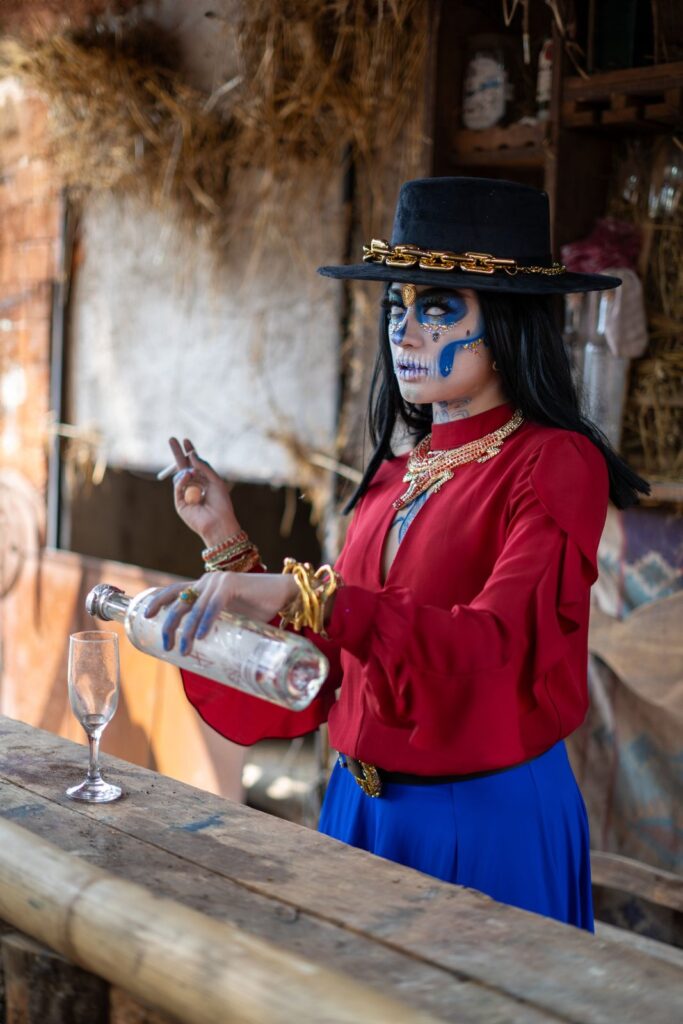
Halloween is the one night of the year when the streets transform into a living, breathing costume parade, and bar crawls become legendary adventures. But if you’ve ever spent 20 minutes trying to navigate from one venue to the next while wearing a full dinosaur costume and heels, you know that poor planning can absolutely crush the vibe. That’s exactly what a group of savvy Halloween bar crawlers in Denver’s LoDo district discovered — and their findings are changing the way people approach bar crawl planning from coast to coast, including right here in Santa Monica, CA.
The story is equal parts fascinating and practical: Halloween bar crawlers in Denver’s LoDo district who switched from app-based route planning to neighborhood-specific venue clustering doubled their photo moments and cut travel time between bars by 18 minutes. Eighteen minutes might not sound like a lot, but when you’re in a group of ten people in elaborate costumes, navigating city blocks, and trying to keep everyone together, that’s the difference between a legendary Halloween and a logistical nightmare.
In this article, we’re breaking down exactly what happened, why it worked, and how you can apply these same principles to your next Halloween bar crawl in Santa Monica — with a little help from the experts at Barcrawlerz, who have been perfecting the art of the organized bar crawl experience for years.
The LoDo Experiment: What Really Happened in Denver
Denver’s Lower Downtown district, affectionately known as LoDo, is one of the most vibrant bar scenes in the country. With its historic brick buildings, lively streets, and dozens of bars packed into a walkable area, it’s a natural playground for Halloween bar crawls. But even in a pedestrian-friendly neighborhood, poor route planning creates real problems.
A group of Halloween enthusiasts decided to conduct what amounted to a real-world experiment. One half of their group used a popular app-based route planner that calculated the “most efficient” path between bars based on distance and walking time. The other half sat down before the event and clustered venues by micro-neighborhood — meaning they grouped bars that were literally on the same block or within a 30-second walk of each other, rather than optimizing purely for geographic distance.
The results were striking. The venue-clustering group:
• Visited the same number of bars in significantly less total travel time
• Reduced their average travel time between venues by 18 minutes across the entire evening
• Had twice as many spontaneous photo opportunities because they spent more time in lively areas rather than transitioning through quieter streets
• Reported higher overall satisfaction with their Halloween experience
• Kept their group together more consistently throughout the night
So what made the difference? Let’s dig into the mechanics of why neighborhood-specific venue clustering outperformed app-based routing.
Why App-Based Route Planning Falls Short on Halloween Night
Apps Optimize for Distance, Not Experience
Most navigation apps are built to get you from Point A to Point B as efficiently as possible. They calculate walking distance, factor in street layouts, and spit out a route. What they don’t account for is the social dynamics of a bar crawl — the spontaneous decisions, the photo stops, the bathroom breaks, and the reality that moving a group of costumed adults through a crowded Halloween street is nothing like moving a single person on a Tuesday afternoon.
Apps also don’t account for which streets are buzzing with Halloween energy. On October 31st, certain blocks become electric with costumed crowds, pop-up photo installations, and street performers. An app might route you down a quieter side street to save 200 feet of walking, but that “efficient” route cuts you off from the very atmosphere that makes Halloween bar crawls magical.
Group Dynamics Change Everything
When you’re bar crawling solo or as a couple, app-based routing works reasonably well. But most Halloween bar crawls involve groups of six to twenty people. Every time you move between venues, you’re herding a group of people in costumes — some of whom are wearing things that make walking difficult, some of whom have already had a drink or two, and all of whom have different walking speeds.
The 18-minute time savings achieved by the LoDo clustering group wasn’t just about shorter distances. It was about reducing the number of “regrouping moments” — those frustrating pauses where half the group has arrived at the next bar and the other half is still half a block behind. When venues are clustered within literal steps of each other, these regrouping moments nearly disappear.
Halloween Night Is Not a Normal Night
Apps pull data from typical conditions. Halloween night in a popular bar district is anything but typical. Streets are more crowded, crosswalk waits are longer because of pedestrian traffic, and some blocks become so packed that what looks like a 3-minute walk becomes a 10-minute shuffle. Neighborhood-specific venue clustering naturally accounts for this by keeping your group in the heart of the action rather than routing you through unpredictable bottlenecks.
The Science of Venue Clustering: How It Actually Works
Defining Your Micro-Neighborhoods
The key to venue clustering is thinking in terms of micro-neighborhoods rather than full districts. In LoDo, for example, the difference between Larimer Street and Blake Street might only be a block, but on Halloween night that block can feel like a mile. Effective clustering means identifying which bars are truly adjacent — sharing a building, facing each other across a narrow street, or connected by a pedestrian alley — and building your route around those natural groupings.
Think of it like building a bar crawl playlist. Instead of jumping randomly between songs, you group them by mood and energy level. You start in one cluster, fully enjoy everything that cluster has to offer, then transition to the next cluster as a group. The transitions become intentional moments rather than logistical headaches.
The Photo Moment Multiplier Effect
One of the most exciting findings from the LoDo experiment was the doubling of photo moments. This makes intuitive sense when you think about it: when your group is clustered in a lively, well-lit, costume-filled area for longer periods of time, you naturally encounter more photo opportunities. Street art, decorated bar entrances, elaborate costumes on other bar crawlers, and Halloween installations all become accessible when you’re spending quality time in a concentrated area rather than constantly transitioning.
“The best Halloween photos don’t happen when you’re rushing between venues. They happen when you’re fully present in a moment, surrounded by the energy of the night. Venue clustering creates those moments by design.” — Barcrawlerz planning philosophy
For social media-minded bar crawlers (which, let’s be honest, is most of us), this is a game-changer. Doubling your photo moments means doubling your content, doubling your memories, and doubling the documented fun that makes your Halloween bar crawl the one everyone talks about for years.
Energy Management and Pacing
Another underrated benefit of venue clustering is energy management. When you’re not constantly walking long distances between bars, you arrive at each venue with more energy and enthusiasm. You’re not winded from a 10-minute walk in costume. You’re not frustrated from navigating a confusing route. You arrive ready to have fun, which means you actually have more fun at each stop.
This pacing effect compounds over the course of an evening. By the time a poorly-planned bar crawl group reaches their fifth venue, they’re often exhausted, scattered, and ready to call it a night. A well-clustered group arrives at their fifth venue with nearly the same energy as their first, because they’ve been conserving physical effort and maximizing social enjoyment throughout.
Bringing These Lessons to Santa Monica’s Halloween Bar Scene
Santa Monica, CA, has one of the most vibrant Halloween atmospheres in Southern California. The combination of beautiful weather (even in late October), a walkable downtown area, and a culturally diverse bar scene makes it a natural destination for Halloween bar crawls. And the lessons from Denver’s LoDo district translate beautifully to Santa Monica’s unique geography.
Santa Monica’s Natural Bar Clusters
Santa Monica’s bar scene naturally lends itself to venue clustering. The Third Street Promenade area, the Main Street corridor, and the Ocean Avenue stretch each represent distinct micro-neighborhoods with their own character and energy. Rather than trying to hit bars across all three areas in a single night — which involves significant travel time and logistical complexity — smart bar crawlers identify which cluster best matches their group’s vibe and build their evening around it.
The Third Street Promenade cluster, for example, offers a high-energy, street-performer-filled atmosphere that’s perfect for groups who want maximum visual stimulation and spontaneous entertainment between bars. The Main Street cluster has a more neighborhood-y, local feel with bars that tend to go all-out on Halloween decorations. Ocean Avenue offers a more upscale experience with stunning views that make for incredible Halloween photo backdrops.
Applying the 18-Minute Principle in Santa Monica
The 18-minute travel time savings achieved in LoDo can be replicated in Santa Monica by applying the same clustering principles. Here’s how to think about it:
First, resist the temptation to build a bar crawl that spans the entire city. It’s tempting to include that one amazing bar on Wilshire and that other great spot near the pier, but every time you add a venue that requires a significant transit, you’re adding travel time that eats into your fun time. A focused cluster of six bars within a three-block radius will almost always deliver a better experience than eight bars spread across a mile.
Second, walk your intended route before Halloween night. What looks walkable on a map can feel very different on a crowded Halloween evening. Identifying potential bottlenecks — narrow sidewalks, busy intersections, areas likely to have street closures — allows you to adjust your clustering strategy in advance.
Third, designate a “rally point” within each cluster. This is a specific, easy-to-find location — a distinctive doorway, a corner, a landmark — where your group automatically reconvenes if anyone gets separated. In Santa Monica, the pier entrance, the Third Street Promenade fountain, and the Main Street clock are all excellent rally points that everyone knows.
How Barcrawlerz Makes This Easy for Santa Monica Halloween Crawlers
Here’s the honest truth: planning a perfectly clustered bar crawl takes time, local knowledge, and organizational skills that not everyone has — especially when you’re also trying to coordinate costumes, manage a group chat, and handle all the other logistics of a Halloween night out. That’s where Barcrawlerz comes in.
Barcrawlerz has built their entire service model around the kind of neighborhood-specific venue clustering that proved so effective in Denver’s LoDo district. Rather than simply providing a list of bars and a generic map, Barcrawlerz does the deep local research to understand which venues cluster most effectively, which routes maximize photo opportunities, and which timing strategies keep groups energized and together throughout the evening.
What Barcrawlerz Offers Halloween Bar Crawlers
For Halloween specifically, Barcrawlerz offers pre-planned crawl experiences that take all the logistical headaches off your plate. Their Santa Monica Halloween bar crawl experiences are designed with venue clustering as a core principle, which means you get all the benefits discovered by those LoDo pioneers — reduced travel time, more photo moments, better group cohesion — without having to do any of the planning work yourself.
Their wristband system ensures that participating venues recognize your group and can accommodate you efficiently, which further reduces transition time between bars. Rather than waiting at a crowded bar entrance while the host tries to figure out if your group has reservations, Barcrawlerz participants move through the experience seamlessly.
The social component of a Barcrawlerz event is also worth highlighting. Because their events bring together multiple groups of bar crawlers who are all following the same clustered route, you naturally encounter other costumed groups at each venue. This creates the kind of spontaneous social energy that makes Halloween bar crawls legendary — and generates significantly more photo opportunities than a private group navigating independently.
The Community Aspect of Organized Bar Crawls
One of the most underappreciated benefits of joining an organized bar crawl like those offered by Barcrawlerz is the community element. Halloween bar crawls are inherently social events, but when you’re navigating independently, you’re often in a bubble with just your own group. Organized crawls break down those bubbles by creating shared experiences and shared spaces.
In Santa Monica, where the Halloween bar scene draws locals, tourists, and transplants from across Los Angeles, this community aspect is particularly valuable. You might end up chatting with a group from Culver City at one stop, then running into them again two bars later because you’re following the same clustered route. These chance encounters are the stuff that Halloween memories are made of.
Practical Tips for Planning Your Own Clustered Halloween Bar Crawl in Santa Monica
Start With a Neighborhood Decision, Not a Venue List
The biggest mistake most bar crawl planners make is starting by listing their favorite bars and then trying to build a route around them. This approach almost always results in a scattered, inefficient route. Instead, start by choosing your neighborhood cluster — Third Street Promenade, Main Street, Ocean Avenue, or another Santa Monica micro-neighborhood — and then identify the best bars within that cluster.
This approach ensures geographic coherence from the start. Every venue you add is already within your cluster, which means every transition between venues is short, easy, and consistent with the neighborhood’s Halloween atmosphere.
Plan for Four to Six Venues in a Two to Three Block Radius
The LoDo experiment found that the optimal balance between variety and efficiency was achieved with venues clustered within a two to three block radius. In Santa Monica’s compact downtown area, this is very achievable. Four to six bars within this radius gives you enough variety to keep the evening interesting without the logistical burden of long transitions.
Spend roughly 45 minutes to an hour at each venue. This gives everyone time to get a drink, find their people, take photos, and enjoy the atmosphere before moving on. With six venues and 45-minute stops, you’re looking at a four to five hour evening — the sweet spot for a Halloween bar crawl that’s memorable without being exhausting.
Designate a Costume-Friendly Photo Stop at Each Venue
One of the key insights from the LoDo experiment was that doubling photo moments required intentionality. Before your crawl, scout each venue for its best photo backdrop — the decorated entrance, the themed cocktail display, the Halloween installation in the corner. When your group arrives, make a point of hitting that photo spot before settling in. This creates a ritual that ensures you capture great content at every stop without it feeling forced or disruptive.
In Santa Monica, many bars go all-out on Halloween decorations, and the outdoor settings — with palm trees, string lights, and ocean-adjacent ambiance — create naturally beautiful photo opportunities. The combination of Halloween costumes and Santa Monica’s distinctive aesthetic is genuinely stunning, and clustered venue planning ensures you have the time and energy to capture it properly.
Use a Group Communication Tool, Not Navigation Apps
Replace your navigation app with a simple group communication tool — a WhatsApp group, a Slack channel, or even a shared Google Doc with the venue list and rally points. When everyone knows where they’re going and the transitions are short, you don’t need turn-by-turn navigation. What you need is a way to quickly communicate if someone gets separated or if the group decides to spend extra time at a particular venue.
This shift in tools reflects a shift in mindset: you’re not navigating a route, you’re experiencing a neighborhood. That mental shift, more than any specific tactical change, is what makes venue clustering so effective.
The Broader Lesson: Experience Design Over Efficiency Optimization
The story of Halloween bar crawlers in Denver’s LoDo district is ultimately a story about the difference between optimizing for efficiency and designing for experience. App-based route planning optimizes for efficiency — it gets you from bar to bar in the least possible time. Neighborhood-specific venue clustering designs for experience — it creates the conditions for maximum enjoyment, social connection, and memorable moments.
This distinction matters because the goal of a Halloween bar crawl is not to visit the maximum number of bars in the minimum amount of time. The goal is to have an incredible Halloween experience with your people. Sometimes those goals align, but often they don’t — and when they conflict, experience should win every time.
“The 18 minutes you save in travel time isn’t just 18 minutes. It’s 18 minutes of laughter, conversation, spontaneous dancing, and photo moments that you get to have instead of walking between bars. That’s the real value of smart venue clustering.” — Barcrawlerz
Santa Monica bar crawlers who internalize this lesson will approach their Halloween planning differently. Instead of asking “which bars do I want to hit?” they’ll ask “what kind of Halloween experience do I want to have, and which neighborhood cluster best delivers that experience?” It’s a subtle shift, but it changes everything about how the evening unfolds.
Making Halloween 2024 Your Best Bar Crawl Yet in Santa Monica
Whether you’re planning your own clustered bar crawl using the principles outlined in this article, or you’re joining a professionally organized experience through Barcrawlerz, the key takeaways from Denver’s LoDo district apply directly to your Santa Monica Halloween plans.
Choose a neighborhood cluster over a scattered venue list. Prioritize photo moments by staying in lively, well-decorated areas. Manage your group’s energy by minimizing transition time and maximizing time spent enjoying each venue. And embrace the community aspect of Halloween bar crawls — the unexpected encounters, the costume compliments from strangers, and the shared experience of celebrating one of the year’s most magical nights together.
Santa Monica’s Halloween bar scene is genuinely special. The weather is reliably beautiful, the bar scene is diverse and creative, and the combination of local regulars and visitors from across Los Angeles creates a festive energy that’s hard to match anywhere else in Southern California. With smart venue clustering and the right planning approach, your Halloween bar crawl here can be everything you want it to be — and then some.
Final Thoughts: Small Changes, Big Results
The Halloween bar crawlers in Denver’s LoDo district didn’t discover anything earth-shattering. They didn’t invent a new technology or develop a complex system. They simply changed the way they thought about organizing their evening — from app-based efficiency optimization to neighborhood-specific experience design. And that simple shift doubled their photo moments and cut their travel time by 18 minutes.
Small changes in approach can yield surprisingly large improvements in experience. That’s true for Denver Halloween crawlers, and it’s equally true for Santa Monica bar crawlers looking to make this Halloween their most memorable yet.
If you want the benefits of venue clustering without the planning work, check out what Barcrawlerz has to offer for Santa Monica Halloween events. Their team has done the neighborhood research, built the venue relationships, and designed the experience so that you can simply show up in your best costume and enjoy every moment of the night.
Halloween only comes once a year. Make it count — and make it legendary.